
Nils Roth · 21 October 2026
Exploring Adaptive Prioritization Systems for Handling Shifting Deadlines in Creative Teams
Creative teams operate in environments where deadlines shift frequently due to client feedback, market changes, and iterative design processes, which creates demand for systems that adapt in real time rather than relying on fixed schedules. Research from the Project Management Institute shows that organizations implementing adaptive prioritization frameworks experience measurable improvements in project completion rates when deadlines move unexpectedly. These systems combine task weighting, resource allocation algorithms, and feedback loops to reorder work items based on current constraints instead of static plans.
Core Mechanisms Behind Adaptive Prioritization
Adaptive prioritization systems track multiple variables at once including task dependencies, team capacity, and external inputs like revised client briefs, while algorithms assign dynamic scores that reflect urgency and impact. Data indicates that teams using these tools reduce missed deadlines by integrating real-time updates from collaboration platforms directly into priority queues. Observers note that such integration prevents bottlenecks because adjustments propagate across the workflow without requiring manual recalculations at every step.
Implementation often begins with mapping existing creative workflows onto flexible structures that allow for continuous reordering, and studies reveal that this approach works effectively in design studios and content production groups where revisions arrive at irregular intervals. Teams assign initial priority values based on strategic goals, then the system recalibrates those values automatically when new information enters the pipeline. This process relies on clear criteria such as revenue potential, regulatory requirements, and creative dependencies to maintain consistency even as conditions change.
Integration with Existing Creative Workflows
Many creative organizations layer adaptive systems onto tools already in use for task tracking and version control, which allows data from design software and client portals to feed directly into prioritization engines. Figures from industry reports highlight that seamless connections between these platforms cut down on context switching and keep team members focused on high-value activities during periods of deadline flux. Experts have observed that successful rollouts include training sessions that demonstrate how priority scores update in response to specific triggers like delayed asset approvals or sudden scope expansions.
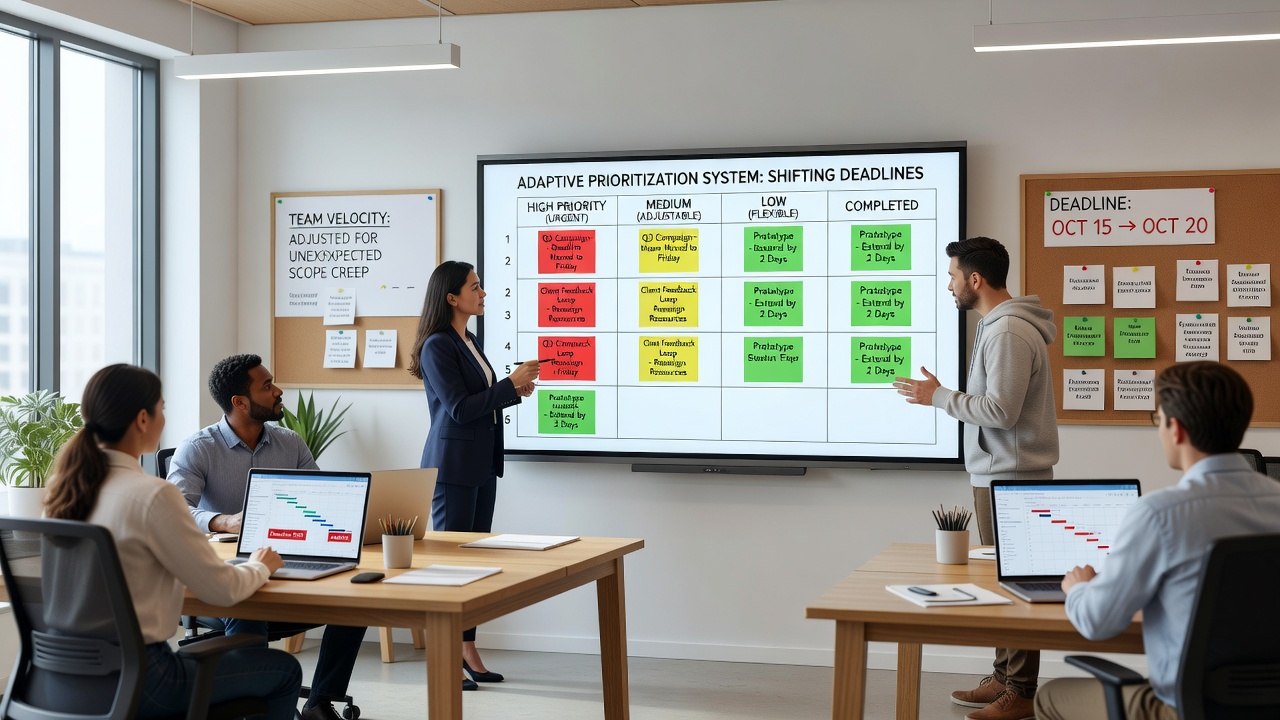
Case examples from media agencies demonstrate that when systems pull live data from multiple sources the resulting priority lists reflect actual workload distribution more accurately than manual methods. Those who've studied these implementations find that weekly review cycles help refine the underlying rules so the system learns from past deadline shifts and improves future predictions. Resource leveling features within these frameworks further prevent overload by redistributing tasks across available team members based on updated timelines.
Data-Driven Adjustments and October 2026 Developments
In October 2026 research published by the Australian Institute of Management examined how creative teams in advertising and digital media adopted machine-learning models to forecast deadline volatility, and the findings showed measurable gains in on-time delivery metrics when teams incorporated predictive scoring alongside human oversight. These models analyze historical project data to identify patterns in revision cycles and client response times, which enables proactive reallocation of creative resources before delays compound. Teams that combine algorithmic suggestions with regular stand-up discussions maintain transparency while benefiting from automated reordering capabilities.
Additional evidence from university studies indicates that visualization layers built into prioritization interfaces help team leads spot emerging conflicts early, such as overlapping high-priority campaigns competing for the same illustrators or writers. The systems flag these overlaps through color-coded alerts and suggested trade-offs, allowing groups to resolve conflicts through informed negotiation rather than reactive firefighting. Geographic variation appears in adoption rates, with European design collectives often emphasizing collaborative input into rule-setting while North American agencies focus more on speed of automated updates.
Challenges in Scaling These Systems
Scaling adaptive prioritization across larger creative departments introduces complexity around data quality and rule consistency, because incomplete input from one department can skew priority calculations for the entire group. Research indicates that organizations address this by establishing data governance standards that require timely updates from all contributors before the system processes new priority rankings. Training programs that teach staff how to interpret and override automated suggestions further reduce friction during adoption phases.
Another consideration involves balancing quantitative scoring with qualitative creative judgment, since rigid adherence to numerical priorities sometimes overlooks intangible factors like team morale or long-term brand alignment. Those who've implemented hybrid approaches report that embedding override mechanisms with audit trails preserves flexibility without undermining the benefits of systematic reordering. Continued monitoring through dashboards allows managers to identify when human intervention produces better outcomes than algorithmic recommendations alone.
Conclusion
Adaptive prioritization systems provide structured methods for creative teams to manage shifting deadlines through dynamic scoring, integrated data flows, and iterative refinement of rules. Evidence from multiple regions and sectors demonstrates that these frameworks improve visibility into workload distribution and support faster responses to external changes when properly configured. Organizations continue to refine their implementations by combining technological capabilities with human oversight, which sustains both productivity and creative quality amid ongoing deadline variability.